

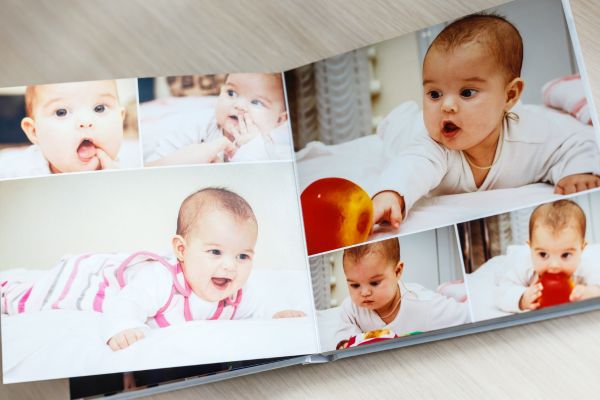
A baby’s first year is full of moments that feel ordinary while they are happening but become surprisingly precious later. Sleepy stretches after feeding, tiny fingers wrapped around a parent’s thumb, the first uncertain smile, and even the mess left behind after a new food can become part of a family’s emotional history.
Most parents take hundreds, sometimes thousands, of photographs during this stage. The challenge is not capturing enough pictures. It is deciding what to do with them.
A thoughtfully designed baby photo book turns a crowded camera roll into a story that can be opened, shared, and remembered. The most meaningful books are rarely the ones with perfect poses on every page. They are the ones that capture personality, change, family life, and all the little details that might otherwise fade.
These creative ideas for baby photo books can help you build something that feels personal rather than predictable.
Tell the Story in Chapters Rather Than Months
A month-by-month layout is a classic choice, and it works well for showing how quickly a baby grows. Still, it is not the only way to organise the story.
Consider dividing the book into chapters based on experiences. You might begin with “Waiting for You,” followed by “The Day We Met,” “Coming Home,” “Learning to Smile,” and “Exploring the World.” Later chapters could focus on movement, food, family traditions, holidays, and the baby’s developing personality.
This approach gives the book a natural narrative. It also removes the pressure to find an equal number of photographs from every month. Some stages are photographed constantly, while others pass during busy or exhausting weeks. A chapter-based structure allows the book to follow the emotional rhythm of the year instead of a rigid calendar.
Include the Days Before the Baby Arrived
A baby photo book does not have to begin with the first hospital picture. The months before the birth are already part of the story.
Ultrasound images, nursery preparations, folded baby clothes, pregnancy photographs, baby shower details, or a picture of the packed hospital bag can create a gentle introduction. You could also include photographs of parents, siblings, or grandparents waiting excitedly for the new arrival.
Adding this opening chapter gives the book a sense of anticipation. It shows that the baby’s story began long before the first photograph of their face.
A short note about how the family felt during those weeks can make the opening even more meaningful. The words do not need to sound polished. Honest details are often more moving, such as remembering which name choices were discussed or which song was played while decorating the nursery.
Pair Milestone Pictures With Everyday Moments
Milestone photographs naturally deserve a place in the book. First smiles, first teeth, first steps, and first birthdays are all important. Yet a book made entirely of major events may miss the atmosphere of daily life.
Include the quieter moments too. A baby asleep on a parent’s chest, sitting beside a pile of unfolded laundry, looking out of the window, or laughing during bath time can say just as much about childhood as a formal milestone image.
One of the most creative ideas for baby photo books is to place milestone photographs beside ordinary pictures from the same period. A page showing the first time the baby sat independently could be followed by a picture of them immediately falling sideways into a cushion. The contrast brings warmth and honesty to the story.
These small, imperfect photographs are often the ones families return to most.
Capture the Details That Change Quickly
Parents naturally focus the camera on a baby’s face, but tiny physical details can disappear almost before anyone notices.
Photograph curled toes, soft hair, wrinkled knees, round cheeks, eyelashes, and hands holding favourite objects. Include a close-up of the hospital bracelet, the first pair of shoes, a well-loved blanket, or the marks on the nursery wall used to record growth.
Detail photographs work beautifully as quiet pages between larger scenes. They give the book visual variety and help recreate the feeling of that stage of life.
Years later, a close-up of a tiny hand resting against a parent’s palm may be more powerful than a perfectly arranged portrait.
Add Short Stories Behind the Photographs
Pictures show what happened, but words preserve the parts the camera missed.
A few sentences beside selected images can explain why a moment mattered. Perhaps the baby laughed every time the dog sneezed, refused to sleep unless a particular song was playing, or developed a serious fascination with ceiling fans. These memories may seem unforgettable now, but many tiny details become blurry over time.
Captions do not need to describe exactly what is visible. Instead of writing, “You are wearing a blue outfit,” record what was happening around the photograph. Mention who was there, what made everyone laugh, or how the day felt.
Handwritten notes can add an especially personal touch if the book format allows scanned writing. Another option is to ask family members to contribute a sentence about a favourite memory.
Create a Page for Baby’s Expressions
Babies have an impressive range of expressions, including several that seem far too dramatic for someone so small.
Dedicate a spread to funny faces, sleepy yawns, confused stares, serious concentration, and sudden laughter. These photographs do not have to be technically perfect. Slight blur, unusual cropping, or unexpected expressions can make the page more lively.
You might arrange the pictures like a contact sheet or place them in a loose sequence that feels like a miniature conversation. A simple heading such as “Many Moods of You” is enough to tie the images together.
This kind of page adds humour and prevents the book from feeling overly formal.
Document Relationships, Not Just the Baby
A baby’s early life is shaped by the people around them. Parents, siblings, grandparents, cousins, friends, and caregivers all become part of the story.
Include photographs that show connection rather than only posed group portraits. A grandparent rocking the baby, a sibling offering a toy, or a parent trying to prepare dinner while holding a sleepy child can reveal far more than everyone smiling at the camera.
You can create individual pages for important relationships or weave them throughout the book. Either way, try to include the adults who are usually behind the camera. Parents often take so many photographs that they accidentally disappear from the visual record.
Use a timer, ask someone else to take the picture, or include the occasional imperfect selfie. Presence matters more than polish.
Build Pages Around Favourite Things
As a baby grows, preferences begin to appear. A certain toy is carried everywhere. One book is requested repeatedly. A particular spoon, blanket, song, or stuffed animal somehow becomes essential.
Create a page or chapter around these favourite things. Photograph them individually and in use. Add a sentence about why they mattered or how the baby reacted when they appeared.
These pages help capture personality. They also make the book more specific to one child rather than feeling like a general record of baby milestones.
A photograph of a worn toy may not seem important at the time, but years later it can bring back an entire season of family life.
Use Colour and Texture to Shape the Mood
A baby photo book does not need elaborate decoration to feel creative. A consistent visual mood can be more effective than adding many decorative elements.
Soft neutral backgrounds can keep attention on the photographs, while brighter colours may suit a cheerful, playful book. You could choose colours from the nursery, favourite clothing, or a recurring blanket to create a subtle connection across the pages.
Texture can also add warmth. Scanned pieces of wrapping paper, fabric patterns, handwritten notes, or a copy of a birth announcement can be used as background details. The goal is not to fill every space. Leaving some pages simple allows important images to breathe.
A little variation is natural, though. Family life is not perfectly coordinated, and the book does not need to be either.
Make Space for the Messy Parts
Early parenthood is tender, funny, tiring, and often messy. Including only clean outfits and calm smiles can leave out half the story.
Photographs of food-covered cheeks, chaotic play areas, failed attempts at family pictures, and exhausted naps can make the book feel real. You might create a page called “Things Did Not Go as Planned” or “Beautiful Chaos.”
These moments bring balance to the more sentimental pages. They also remind future readers that love was present even on difficult days.
Some of the best creative ideas for baby photo books come from embracing what actually happened rather than trying to create a flawless version of it.
End With a Letter for the Future
The final pages offer a chance to pause and reflect.
Write a letter to the baby about the year you shared. Describe what surprised you, what you loved, what challenged you, and what you hope they will know when they read the book later. The letter can be written by one parent, both parents, or several family members.
Try not to worry about making it poetic. Simple, sincere language will carry more meaning than carefully polished phrases. Mention the qualities already beginning to appear, the memories you want to keep, and the joy the baby brought into everyday life.
The letter gives the book emotional closure while also opening a path toward the years ahead.
A Baby Photo Book Should Feel Like Your Family
The most memorable baby photo books are not necessarily the most professionally designed. They are the ones that hold the texture of real life: the celebrations, the quiet afternoons, the tired faces, the favourite toys, and the people who were there.
When exploring creative ideas for baby photo books, start with the story rather than the layout. Choose photographs that make you feel something, even when they are not perfectly lit or carefully posed. Add enough words to preserve the memories behind them, but allow the images to speak too.
Over time, the book will become more than a collection of baby pictures. It will become a record of how a new person entered the family and slowly began to reveal who they were.