

Bath time can be a lovely pause in a busy day, but it is also one of the few everyday routines where water, slippery surfaces, hot taps and a wriggling baby meet in a small space. Good bath time safety for babies is less about buying extra equipment and more about planning before the water runs. A shallow bath, comfortably warm water and an adult who stays close throughout make a safer routine.
Prepare the room before you undress your baby
Gather a clean towel, washcloth, fresh nappy, clothes and any mild cleanser you plan to use. Put everything within reach of the adult bathing the baby, but beyond the baby’s grasp. Warm the room, clear the floor and put your phone aside. The safest bath is one you never need to interrupt for a forgotten towel.
Try a simple rehearsal: imagine the doorbell rings just as your baby’s hair is wet. Your plan should already be to lift the baby out, wrap them in a towel and take them with you. Never leave them in the water while you answer it, even if you think you’ll be back immediately.
How much water belongs in a baby’s bath?
Use a small amount of water in a suitable infant tub. The American Academy of Pediatrics advises around 2 inches (5 cm) for infant bathing. Check your tub’s instructions as well. Keep the baby’s face and head well above the surface, with an adult supporting their position. More water does not make a baby cleaner; it increases the amount they could slip beneath.
Babies can drown silently in just an inch or two of water. A newborn cannot reliably lift or turn their head clear, while an older baby may suddenly roll or lunge forward. Neither a shallow water level nor a baby bath seat removes the need for close supervision.
Check the bath water temperature for your baby
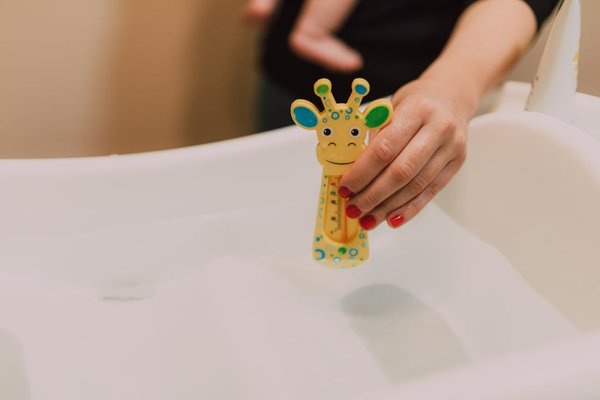
Warm, not hot, is the goal. A bath temperature around 37–38°C (98.6–100.4°F) is commonly recommended for babies. A bath thermometer makes checking easier, but also test the mixed water with your wrist or elbow. It should feel comfortably warm rather than hot. Stir thoroughly so warmer pockets do not remain near the tap.
Run cold water first, then add hot water while filling. Turn the tap off and check the temperature before lowering your baby in. Never add hot water while your baby is in the bath: a sudden stream or temperature change can cause a scald. For household tap safety, the American Academy of Pediatrics advises limiting the hottest water delivered at the faucet to 120°F (about 49°C). Ask a qualified professional about anti-scald protection if needed.
Supervision means staying within touching distance
For infant bathing safety, an adult should remain close enough to keep a supporting hand on the baby throughout the bath. Looking up, turning to search a cupboard or asking an older sibling to watch creates unnecessary risk. Drowning may happen quickly and without a splash or cry.
Bath supports are not safety devices
Bath seats, rings, slings and supports may look reassuring, but they can slip, tip or allow a baby to slide under the water. Do not rely on them to hold a baby unattended. If you use a tub with an integrated support, follow its age and weight limits and continue hands-on supervision. Choose a stable, age-appropriate infant bath on a secure surface rather than balancing a tub on furniture.
Prevent slips, bumps and faucet injuries
Soap and water make skin slippery, and babies become unexpectedly strong kickers. Support the head and shoulders of a young infant as you lower them feet first, then keep a secure hold while washing. Avoid reaching away while holding a wet baby.
For an older baby using a family bathtub, use a suitable non-slip surface and protect against hard faucet edges. Keep the tap off during bathing and move toys away from the faucet area. A non-slip mat helps with traction, but cannot prevent every fall or replace your attention.
Choose simple products and a sensible bathing routine
Newborns generally do not need a full bath every day. Cleaning the face, neck, hands and nappy area between baths is often enough. Plain water works well for young babies, especially in the first month; if you use a product later, choose a mild, baby-suitable cleanser and use it sparingly. Strong fragrances and excess soap may irritate delicate skin and make the water slippery.
Keep bottles closed and out of reach. Avoid loose cords, electric grooming appliances and anything that might fall into the water. Wash gently around skin folds, then lift your baby onto a waiting towel and pat the folds dry. A quick, calm bath is easier to manage than a long session when a baby is cold or tired.
Make bathroom safety continue after the bath
Drain the infant tub and family bath promptly. Never leave standing water for later, even behind a closed door. Store bathing equipment where it can dry, and inspect it for cracks, unstable parts or mould. As your baby becomes mobile, use bathroom door and toilet-lid safety measures; unexpected crawling and climbing can begin sooner than parents expect.
Connect this preparation with wider babyproofing the bathroom habits: keep medicines and cleaners secured, remove electrical items from wet areas and clear the floor. Related routines worth reviewing include newborn care essentials and preventing household burns.
What if a baby slips under the water?
Lift the baby out immediately. If they are unresponsive or not breathing normally, call emergency services and begin infant CPR as directed by the dispatcher or your training. If the baby was submerged and has coughing, breathing difficulty, unusual sleepiness or other concerning symptoms afterward, seek urgent medical assessment. Do not delay care while trying home remedies. Learning infant CPR before an emergency is a valuable part of family water safety.
Frequently asked questions
Can I leave my baby in the bath for a few seconds?
No. Never leave a baby alone in bathwater, not even with a bath seat or an older child nearby. Take the baby with you if you must leave.
What is the safest baby bath water temperature?
Around 37–38°C (98.6–100.4°F) is a useful guide. Mix the water, check it before bathing and ensure it feels warm rather than hot.
Is a bath seat safe once my baby can sit?
A bath seat cannot prevent drowning and may tip or allow a child to slip through. Stay within touching distance and never treat it as a substitute for adult support.
Do babies need a bath every night?
No. Many newborns need only a few baths a week, with regular cleaning of their face, folds and nappy area. Adjust for your baby’s needs and skin comfort.
A calmer, safer bath starts before the water
The most reliable baby bath safety routine is simple: set everything out, use shallow water, check the temperature, keep a secure hand on your baby and empty the bath afterward. Those habits address serious risks without turning a gentle ritual into an anxious one. As your baby grows and moves differently, revisit the setup rather than assuming yesterday’s routine will always be enough.