

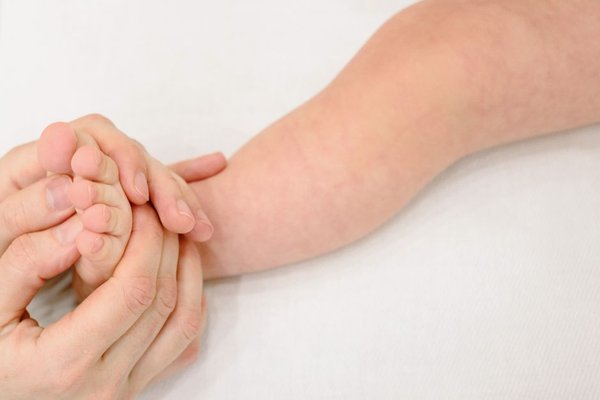
Your baby may seem hungry, latch for a moment, then pull away crying. A fever or a few unexpected spots might make the picture more confusing. Hand, foot, and mouth disease in babies often looks like this: a common viral infection that is usually mild, but can make feeding surprisingly painful. The main priority is not making the rash disappear. It is keeping your baby comfortable and drinking enough while the infection runs its course.
How to recognize hand, foot, and mouth symptoms
Hand, foot, and mouth disease (HFMD) is caused by enteroviruses, including coxsackieviruses. It spreads easily through saliva, respiratory secretions, blister fluid, contaminated objects, and stool. Babies can catch it from siblings, caregivers, or group childcare. Symptoms commonly begin about three to five days after exposure, although timing varies.
Fever and changes in feeding
The first clues may be fever, fussiness, reduced appetite, or unusual tiredness. A baby cannot tell you that swallowing hurts, so watch for shortened feeds, crying at the bottle or breast, or more drooling than usual. These changes can appear before the characteristic rash.
Painful mouth sores
Small red spots inside the mouth may become blisters or shallow ulcers, especially on the tongue and inner cheeks. When mouth sores make your baby reluctant to swallow, dehydration becomes a bigger concern than the sores themselves. Teething can cause drooling and discomfort, but it does not explain a typical combination of fever, mouth ulcers, and a hand-and-foot rash.
Rash on hands, feet, and elsewhere
The rash may appear as flat spots, raised bumps, or small blisters on palms and soles. It can also involve the diaper area, arms, or legs. On darker skin, spots may look brownish or purplish rather than bright red. Not every baby develops every symptom, and a viral rash on a baby can have other causes.
The feeding-first approach to home care
Many parents focus on counting spots, but feeding is the more useful daily measure. Breast milk or formula remains the main source of fluids for infants. Offer smaller, more frequent feeds instead of trying to finish a usual large bottle or long nursing session. For babies younger than six months, do not substitute plain water for breast milk or formula.
For example, if your eight-month-old cries after a few swallows, pause and offer a smaller amount again soon. A clean spoon or medicine syringe may be easier than a bottle nipple if sucking irritates mouth sores. Give fluids slowly with your baby upright and alert; never squirt liquid toward the back of the throat. Ask your pediatrician about oral rehydration solution if intake is falling.
For babies already eating solids, cool, smooth foods such as plain yogurt or chilled puree may feel better. Avoid acidic citrus, spicy foods, and rough textures that sting. Do not push solids when drinking is the challenge. Keep track of wet diapers compared with your baby’s normal pattern; our guide to signs of dehydration in babies can help you recognize concerning changes.
Comfort measures that are safe for babies
Most cases clear without a specific antiviral medicine. Dress your baby comfortably, allow rest, and gently clean the skin with water. Leave blisters intact rather than popping them. Antibiotics do not treat this viral infection.
Ask your child’s clinician about an appropriate weight-based dose of acetaminophen for pain or fever. In the United States, ibuprofen should not be given to infants younger than six months unless a doctor specifically directs it, and it should be avoided when a child is dehydrated. Never give aspirin. Avoid oral numbing gels containing benzocaine or lidocaine; these can be dangerous for young children. A baby fever guide can provide additional context, but age-specific medical advice matters most.
When to call the doctor or seek urgent care
Contact a healthcare professional promptly if your baby is younger than six months and appears to have HFMD, cannot drink normally, has worsening symptoms, or has a fever lasting more than three days. Also arrange an assessment if symptoms have not improved after ten days or if your baby has a weakened immune system.
For a baby younger than three months, a temperature of 100.4°F (38°C) or higher needs immediate medical assessment, even if HFMD seems likely. Seek urgent help for markedly fewer wet diapers, no urine for about eight hours, a very dry mouth, no tears, a sunken soft spot, or unusual drowsiness. Breathing difficulty, trouble waking, seizures, a stiff neck, or new weakness require emergency care. Do not wait for the rash to become severe before acting on these signs.
Recovery, contagiousness, and protecting the household
Most children recover within seven to ten days. Fever often settles earlier than the mouth sores and rash. Some peeling may follow as the skin heals. If your baby’s symptoms persist or worsen, check in with a clinician.
HFMD spreads most readily during the first week, but the virus can remain in stool for weeks afterward. Wash hands with soap and water after every diaper change, clean shared toys and frequently touched surfaces, and avoid sharing cups or utensils. Keep a sick baby away from close contact with other young children when possible.
Childcare return generally depends on being fever-free, feeling well enough to participate, and not having uncontrolled drooling from mouth sores; follow the provider’s and local childcare rules. A guide to common baby rashes can help distinguish HFMD from other skin changes, but a rash alone cannot confirm the diagnosis.
Frequently asked questions
Can a baby get hand, foot, and mouth disease without a rash?
Yes. Some babies have fever or mouth sores with only a faint rash, or no obvious skin spots. Other infections can look similar, so ask a clinician when symptoms are unclear, particularly in a young infant.
Is hand, foot, and mouth disease dangerous for newborns?
Most infections are mild, but newborns and very young infants need extra caution because fever, poor feeding, and dehydration can become serious quickly. Any fever of 100.4°F (38°C) or higher in a baby younger than three months requires immediate assessment.
Can my baby catch HFMD twice?
Yes. Different viruses can cause HFMD, so having it once does not provide reliable protection against every future infection. Handwashing and careful cleaning remain useful even after recovery.
Should I stop breastfeeding if my baby has HFMD?
Usually not. Continue offering breast milk if your baby can feed, using shorter, more frequent sessions when needed. If latching is painful, ask your pediatrician or lactation professional about safe alternatives for providing expressed milk.
A calm plan for the next few days
Hand, foot, and mouth disease in babies can turn ordinary feeding into the hardest part of the day. Offer frequent fluids, treat discomfort with age-appropriate guidance, and watch your baby’s alertness and wet diapers more closely than the number of spots. Most babies improve within a week or so, but a very young infant, reduced fluid intake, or any serious warning sign deserves prompt medical attention.