

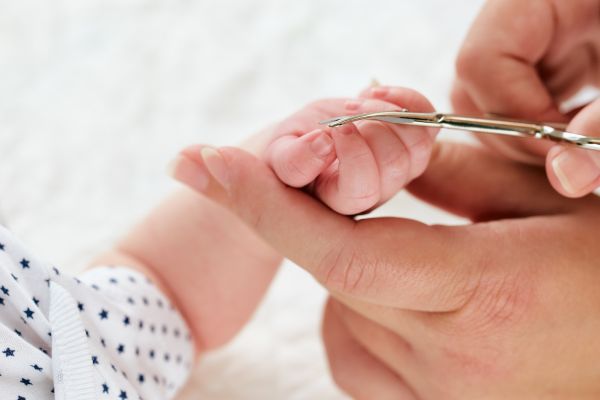
Tiny baby hands have a way of looking impossibly delicate. Those little fingers curl around yours, rest against soft cheeks, and wave around in sudden, uncoordinated bursts. Then, almost overnight, you notice something surprising: your baby’s nails are sharp. Really sharp. Newborn nails may look thin and harmless, but they can scratch tender skin quickly, especially around the face.
For many new parents, learning how to trim baby nails feels more stressful than it should. The fingers are small, the baby keeps moving, and the idea of accidentally nicking the skin is enough to make anyone hesitate. The good news is that nail care becomes much easier with a little patience, the right timing, and a calm approach. It does not need to be a dramatic event. In fact, once you find a rhythm, it can become just another small part of caring for your baby.
Why Baby Nails Need Regular Care
Baby nails grow faster than many parents expect. Some babies are even born with long nails, while others seem to develop scratchy edges within a few days. Because babies do not yet have control over their hand movements, they often rub, swipe, or grab at their own face without meaning to. A tiny uneven nail can leave a visible scratch before you even realize what happened.
Keeping nails short and smooth helps protect your baby’s skin. It also prevents nails from catching on blankets, clothing, or mittens. This is especially useful during the early weeks when babies move their hands suddenly and cannot pull away if something snags.
Regular nail care is not about making the nails look perfect. It is really about comfort and safety. A neat, smooth edge is enough.
When to Start Trimming Baby Nails
There is no need to wait for a specific age if your baby’s nails are already long or sharp. Some parents start in the first week, while others wait a little longer and gently smooth the nails instead. The right time depends on your baby’s nails and your own confidence.
In the newborn stage, nails can be very soft and flexible. If they are not too long, you may only need to file the edges gently. If the nails are scratching the baby’s face or catching on fabric, it may be time for a trim. The key is to go slowly and avoid cutting too close.
Many parents feel nervous the first time, and that is completely normal. Baby nail care is one of those small tasks that feels intimidating until you have done it a few times.
Choosing the Right Time
Timing makes a big difference. Trying to trim baby nails when your little one is hungry, overtired, or waving their arms around is rarely a peaceful experience. A sleepy, calm baby is much easier to handle.
Many parents find that after a bath is a good time because the nails are softer. Others prefer trimming nails while the baby is asleep. This can work beautifully, especially in the early months. If your baby sleeps deeply, you can gently hold one hand, trim one or two nails, and pause if they stir.
Feeding time can also work if another adult is helping. One person can hold and comfort the baby while the other carefully trims. There is no rule that all nails must be done in one sitting. If you manage three nails today and the rest later, that still counts.
What You Can Use to Trim Baby Nails
Baby nail clippers, small baby scissors with rounded tips, and soft nail files are the most common tools. A baby nail file is often the gentlest choice for newborns, especially when the nails are soft and only need smoothing. Clippers can work well once you feel steady, but they should be designed for babies because adult clippers are usually too large.
Some parents prefer small baby scissors because they allow more control over the curve of the nail. Others feel safer with clippers. There is no single perfect tool. The best one is the one you can use calmly and carefully.
Good lighting matters more than people think. Sit near a window during the day or use a bright lamp so you can clearly see the nail edge. When the nail and fingertip are visible, the whole task feels less uncertain.
How to Trim Baby Nails Step by Step
Start by holding your baby’s hand gently but firmly. Press the fingertip pad slightly away from the nail so you can see the white edge clearly. This helps reduce the chance of catching the skin.
Trim only the white part of the nail. Keep the cut small and shallow rather than trying to remove too much at once. Baby fingernails are usually best trimmed following the natural curve of the fingertip. After trimming, check for any sharp corners and smooth them with a soft file.
Toenails need a slightly different approach. They should be cut more straight across, not too deep at the sides. Cutting toenails too short or rounding the corners too much can sometimes make the edges press into the skin as they grow.
Move slowly. If your baby pulls away, pause. If you feel tense, take a breath. This is not a task that rewards rushing.
Filing Instead of Cutting
Filing can be a very good option, especially during the first few weeks. It is gentle, quiet, and less likely to cause accidental cuts. A soft baby nail file can smooth sharp edges without removing too much nail.
The only challenge is that filing takes longer. If your baby is awake and active, they may not stay still for long enough. That is why filing during sleep or after feeding can be helpful. Some parents file a little every day rather than doing a full trim once a week.
If the nails are very long, filing alone may feel slow. In that case, a tiny trim followed by filing can give the neatest result.
What to Avoid When Trimming Baby Nails
It may be tempting to bite baby nails if they look thin and easy to remove, but this is not a good habit. It can leave uneven edges, and it may introduce germs to tiny fingers. Peeling the nails is also risky because it can tear too far down and make the skin sore.
Avoid cutting nails too short. Baby nails do not need to be trimmed down to the skin. Leaving a small white edge is safer and more comfortable. Also try not to trim when you are distracted. A quick nail trim while multitasking can easily become stressful.
If your baby is crying hard or moving too much, stop and try again later. Nail care can wait until the moment is calmer.
What to Do If You Accidentally Nick the Skin
Even careful parents sometimes nick the skin. It feels awful, but it is usually minor. Stay calm and gently press a clean cloth or gauze over the area until the bleeding stops. Avoid putting a tight bandage on a tiny finger because babies put their hands in their mouths, and loose bandages can become unsafe.
Once the bleeding has stopped, keep the area clean. If you notice redness, swelling, warmth, pus, or your baby seems unusually uncomfortable, it is best to contact a healthcare professional for advice. Most small nicks heal quickly, but it is always better to be cautious with babies.
Try not to let one small accident make you afraid of trimming forever. It happens, and it does not mean you did anything wrong.
How Often Baby Nails Need Trimming
Fingernails often need attention once or twice a week, especially in the early months. Toenails usually grow more slowly and may not need trimming as often. Some babies seem to grow nails incredibly fast, while others can go longer between trims.
Rather than following a strict schedule, check your baby’s nails regularly. If they feel sharp when they brush against your skin, they probably need smoothing. If they are catching on clothing or leaving marks on the baby’s face, it is time.
Keeping a small nail file nearby can make maintenance easier. A quick smoothing session can prevent the nails from becoming sharp again.
Making Nail Care Feel Less Stressful
The emotional side of trimming baby nails is real. Parents often feel pressure to do it perfectly, especially with a newborn. But babies are wiggly, nails are tiny, and confidence takes time.
It can help to make nail care part of a quiet routine. Choose a calm time, use good lighting, and do not expect to finish all at once. Some parents sing softly, talk to the baby, or trim nails while another adult offers comfort. Others wait until the baby is deeply asleep and treat it like a tiny, careful mission.
With time, your hands become steadier. You learn how your baby moves, when they are calmest, and which tool feels easiest. What once felt nerve-wracking becomes ordinary.
Conclusion
Learning how to trim baby nails safely is one of those small parenting skills that builds with practice. At first, it can feel surprisingly delicate, almost like you need an extra pair of hands and a lot more courage. But the basics are simple: choose a calm moment, use baby-friendly tools, trim only the white edge, and smooth away anything sharp.
Baby nail care is not about perfection. It is about keeping your little one comfortable and preventing scratches while they grow, wiggle, and discover their hands. Go slowly, pause when needed, and trust that confidence will come. Like so many parts of caring for a baby, it gets easier each time you do it.